
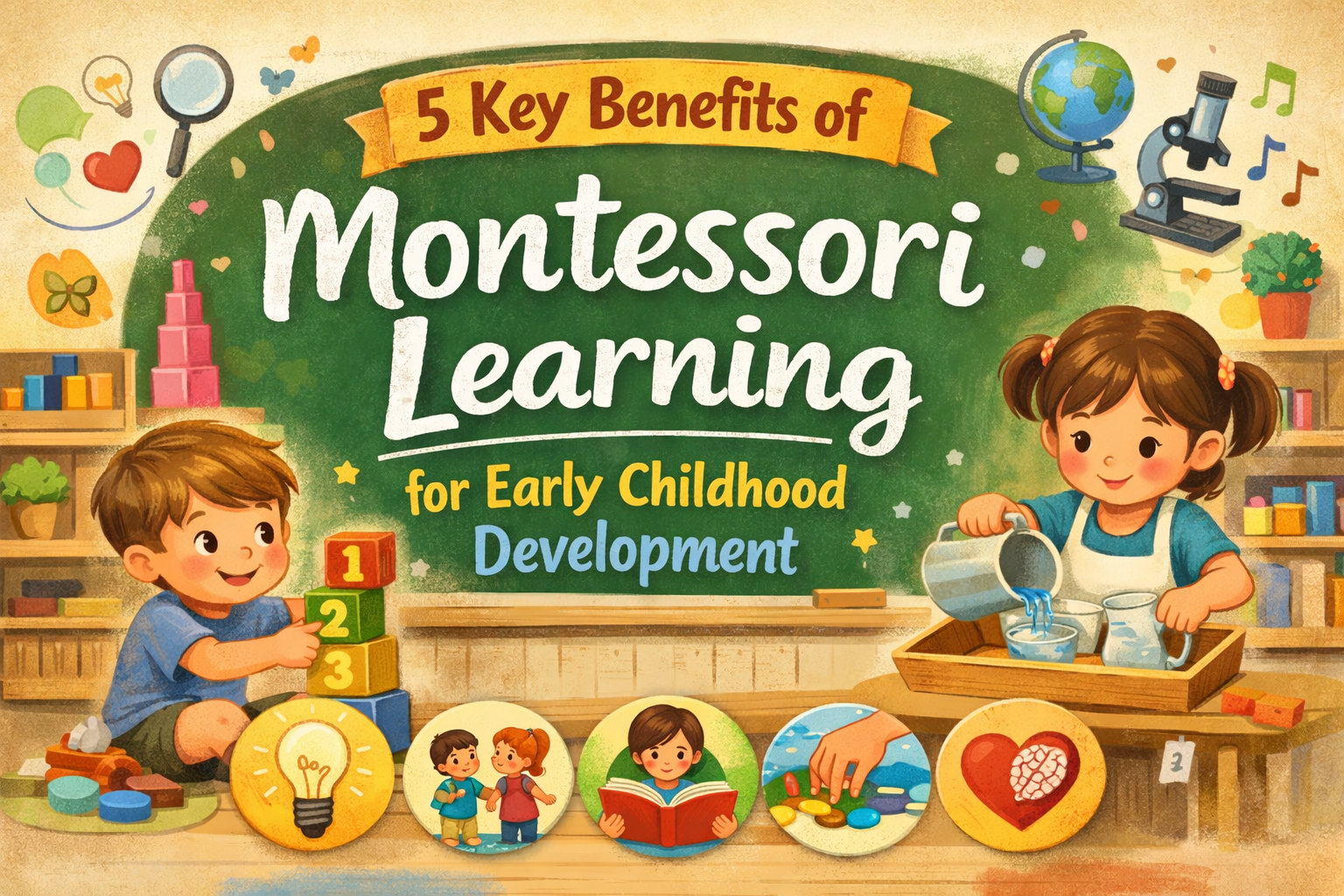

Early childhood is a critical period in a child’s life. Between birth and the age of six, children experience rapid cognitive, emotional, social, and physical development. The educational approach chosen during these formative years can have a lasting impact on how children think, learn, and interact with the world. Among the many early learning systems available today, Montessori learning has earned global recognition for its child-centered, developmentally appropriate approach.
Montessori learning is not just an academic method; it is a holistic system designed to nurture independence, confidence, and a genuine love for learning. This article explores five key benefits of Montessori learning for early childhood development and explains why many parents consider it one of the most effective foundations for lifelong success.
Understanding Montessori Learning in Early Childhood
Montessori learning is based on the idea that children learn best when they are free to explore within a structured and supportive environment. Instead of passive instruction, children engage in hands-on activities that align with their developmental readiness and interests.
Early childhood Montessori programs typically serve children from 18 months to 6 years of age and focus on building foundational skills through purposeful activities. The classroom environment, learning materials, and teaching approach are all carefully designed to support natural development.
Before examining the specific benefits, it is important to understand that Montessori learning emphasizes:
- Individualized learning pace
- Respect for each child’s abilities
- Active participation rather than memorization
- Development of both academic and life skills
Benefit 1: Encourages Independence and Self-Confidence
One of the most significant benefits of Montessori learning is its strong focus on independence. From a very young age, children are encouraged to do things for themselves rather than relying on adults for every task.
How Montessori Builds Independence
Montessori classrooms are designed to support self-sufficiency. Furniture, shelves, and materials are placed at child height, allowing children to choose activities and work independently. Everyday tasks such as pouring water, cleaning up, buttoning clothes, and organizing materials are part of the learning process.
Children are taught how to perform tasks rather than having tasks done for them. This approach sends a powerful message: “You are capable.”
Impact on Early Childhood Development
When children are trusted with responsibility, they develop confidence in their abilities. Independence in early childhood leads to:
- Higher self-esteem
- Strong decision-making skills
- Willingness to take on challenges
- Reduced dependence on constant adult approval
Children who feel capable are more likely to approach learning with curiosity and persistence rather than fear or hesitation.
Benefit 2: Supports Natural Cognitive Development
Montessori learning aligns closely with how young children naturally think and process information. Instead of forcing abstract concepts too early, Montessori introduces learning in a concrete, hands-on way.
Learning Through Experience
In Montessori classrooms, children manipulate objects to understand concepts. For example:
- Math concepts are taught using physical materials before numbers on paper
- Language skills develop through sound recognition, conversation, and tactile letters
- Problem-solving emerges through trial, error, and self-correction
This experiential approach helps children truly understand what they are learning rather than memorizing information temporarily.
Cognitive Benefits
Montessori learning supports:
- Critical thinking
- Logical reasoning
- Memory development
- Ability to make connections between ideas
By engaging multiple senses, children retain information more effectively and develop a deeper understanding of concepts that prepares them for advanced learning later on.
Benefit 3: Develops Strong Concentration and Focus
In today’s fast-paced world, the ability to focus is becoming increasingly valuable. Montessori learning places a strong emphasis on concentration, starting in early childhood.
Uninterrupted Work Periods
Unlike traditional classrooms where activities are frequently interrupted, Montessori classrooms offer long, uninterrupted work periods. During this time, children can fully immerse themselves in chosen activities without being rushed.
Children are not required to switch tasks based on a fixed schedule. Instead, they work on activities for as long as their interest and concentration last.
Long-Term Impact on Attention Skills
This approach helps children develop:
- Longer attention spans
- Ability to complete tasks independently
- Persistence in problem-solving
- Improved self-discipline
Children who learn to concentrate deeply at a young age are better equipped to handle academic challenges and complex tasks as they grow older.
Benefit 4: Enhances Social and Emotional Development
Early childhood is a crucial stage for developing emotional intelligence and social skills. Montessori learning addresses these areas intentionally through its classroom structure and daily interactions.
Mixed-Age Learning Environment
Montessori classrooms typically include children of different ages within a defined range. This mixed-age structure mirrors real-life social settings and offers several developmental advantages:
- Younger children learn by observing older peers
- Older children develop leadership and empathy
- Collaboration replaces competition
Children naturally learn patience, respect, and cooperation as part of daily classroom life.
Emotional Growth and Self-Regulation
Montessori environments are calm, respectful, and predictable. Children are guided to:
- Express emotions appropriately
- Resolve conflicts peacefully
- Respect others’ work and personal space
Rather than using rewards or punishments, Montessori learning encourages intrinsic motivation. Children learn to take responsibility for their actions, leading to stronger emotional regulation and resilience.
Benefit 5: Fosters a Lifelong Love for Learning
Perhaps the most valuable benefit of Montessori learning is its ability to cultivate a genuine love for learning. When children enjoy learning, they become motivated learners for life.
Learning Driven by Curiosity
In Montessori classrooms, children choose activities that align with their interests and developmental needs. This sense of ownership makes learning enjoyable rather than forced.
Children are not pressured by grades, comparisons, or competition. Instead, they experience the satisfaction of mastering skills at their own pace.
Long-Term Educational Benefits
Children who develop a love for learning early often show:
- Greater academic confidence
- Willingness to explore new subjects
- Positive attitude toward school
- Strong intrinsic motivation
These qualities support success not only in formal education but also in personal and professional life.
Additional Developmental Advantages of Montessori Learning
Beyond the five key benefits, Montessori learning also supports several other aspects of early childhood development:
Language and Communication Skills
Children are encouraged to communicate clearly, ask questions, and engage in meaningful conversations. Rich language exposure strengthens vocabulary and comprehension.
Practical Life Skills
Daily activities such as cleaning, organizing, and caring for the environment teach responsibility, coordination, and respect for shared spaces.
Adaptability and Problem-Solving
Montessori learning encourages children to think independently and find solutions on their own, building adaptability and resilience.
Is Montessori Learning Right for Every Child?
Montessori learning benefits a wide range of learners, especially those who:
- Thrive in calm, structured environments
- Enjoy hands-on exploration
- Need individualized attention
- Benefit from learning at their own pace
While adjustment periods may vary, most children adapt well and flourish in Montessori settings when given time and consistency.
What Parents Should Observe When Choosing a Montessori Program
To ensure children receive the full benefits of Montessori learning, parents should look for:
- Trained and experienced Montessori educators
- Authentic Montessori materials
- A well-organized, calm classroom environment
- Respectful interactions between teachers and children
- Clear communication between school and parents
Choosing an authentic Montessori program is essential for maximizing developmental benefits.
Conclusion
Montessori learning offers a powerful foundation for early childhood development by nurturing independence, cognitive growth, focus, emotional intelligence, and a lifelong love for learning. Rather than treating education as a one-size-fits-all process, Montessori respects each child’s individuality and natural development.
For parents seeking an educational approach that supports both academic excellence and essential life skills, Montessori learning provides a balanced, research-based solution. When children are empowered to explore, discover, and grow at their own pace, they develop the confidence and competence needed to succeed well beyond the classroom.
By investing in Montessori learning during early childhood, parents are not just choosing an education system they are choosing a developmental pathway that supports their child’s full potential.